
Maharashtra has topped the list of states with the most favourable ecosystem for the growth of Farmer Producer Organisations (FPOs), replacing Madhya Pradesh, which has slipped to second place, according to the latest Ease of Doing Business for FPOs (EoDBF) ranking.

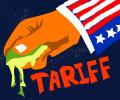
The 50 per cent US tariff on Indian goods pose a downside risk to growth but the impact is expected to be short-lived for the economy, and consumption demand could see an uptick after the new goods and service tax (GST) rates are implemented which could even offset the external uncertainty, Chief Economic Advisor (CEA) V Anantha Nageswaran reckoned on Friday.
'If the near-term economic pain is absorbed more by those who have the ability and the financial strength to do so, then small and medium enterprises in downstream industries will emerge stronger from the trade imbroglio.'

'...as then it brings them closer to the complaints and grievances that the public faces.'

Nitin Gadkari said AI will be used to detect landslides, waterlogging and accident-prone spots on highways, while highlighting logistics cost cuts and road safety initiatives
'To encourage the habit of saving, a portion of the incentive will be kept in a savings instrument of deposit account for a fixed period and can be withdrawn by the employee at a later date.'

'The state governments of Gujarat, Maharashtra and Tamil Nadu will be encouraged to consider measures of their own as the employment and economy in such export-oriented states will be affected.'

The land pooling policy aims to kick-start a new wave of urbanisation in the predominantly rural state.

The US' move to raise the tariff on most Indian goods to 50 per cent could drag India's GDP growth for FY26 by 35 to 60 basis points, according to various economists. One basis point (bp) is equal to 0.01 per cent.
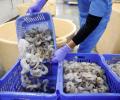
India's shrimp sector was pushed into uncertainty following US President Donald Trump's decision to impose a 25 per cent tariff on all goods imported into the US from India.
With inflation comfortably below the Reserve Bank of India's (RBI's) 4 per cent median target and likely to undershoot its 3.7 per cent projection for 2025-26 (FY26), there is room for the monetary policy easing cycle to be sustained, the Finance Ministry said on Monday. The comments, featured in the ministry's Monthly Economic Review for June 2025, assume significance ahead of the Monetary Policy Committee (MPC) meeting of the Reserve Bank of India (RBI) scheduled to begin from August 5.

India is seeking either an exemption or a longer timeline on the pharmaceutical tariffs, expected to kick in by July 31.

'It is not rigidity.' 'I am just sticking to what I believe very strongly in, particularly if you have been given an opportunity to serve the country....'

The rise was more pronounced in urban areas than in the rural areas.

A recent World Bank report placing India among the most equal countries globally may present a limited view of inequality, with economists suggesting that broader data sets could tell a different story. According to the report, India's Gini index (or coefficient/ratio), a key measure of inequality, stood at 25.5 in 2022-23, placing the country fourth globally in terms of equality, behind only the Slovak Republic, Slovenia, and Belarus.

The bulk of these districts are in Bihar, where 87 per cent districts are monsoon-deficient till July 9.

India's consumer price index (CPI)-based retail inflation rate is likely to have cooled further in June, thus remaining below the 4 per cent target of the Reserve Bank of India (RBI) for a fifth consecutive month, giving the central bank wiggle room to focus on growth. Economists reckon that the decline is on account of easing prices in various categories of goods, especially food items, and a favourable base effect.
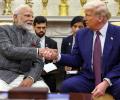
'India's farmers will be unable to compete with the US, given the subsidies that the latter provides its farmers.'

The recent notification by the Insolvency and Bankruptcy Board of India (IBBI) allowing part-resolution of stressed assets of companies under the insolvency process has sent many resolution professionals (RPs) and committees of creditors (CoCs) back to the drawing board to reassess their strategies for resolving corporate insolvencies.
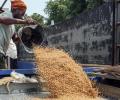
Very sensitive items -- such as apples, which carry political weight and are closely tied to farmer interests in states like Himachal Pradesh and Uttarakhand -- may face restricted concessions.
 © 2025 Rediff.com - Investor Information - Advertise with us - Disclaimer - Privacy Policy - Sitemap - Feedback - About us - Terms of use - Grievances